Why timing matters more than most people expect
Water does not stop spreading just because the source looks small. In a Birmingham building, a slow drip behind a wall can soak insulation, lift flooring, and feed mold within a couple of days. Humidity here runs high for much of the year, so things dry slower than people assume, and that makes a small leak a bigger job by the end of the week.
If you own or manage a commercial space in Birmingham, a little water on the floor can look manageable. Sometimes it is. Other times the water has already traveled under the subfloor and into the walls where you cannot see it. The goal is to recognize the signs that the situation is moving faster than you are.
Our team at Birmingham Insurance Claim Assistance sees this pattern often. The leak that got called in as "just a little wet" is the one that ends up costing a tenant their inventory and a building owner weeks of downtime.
Signs that commercial water damage is urgent
Some warning signs should get a phone call the same hour you notice them. Treat these as urgent, not as things to check on tomorrow:
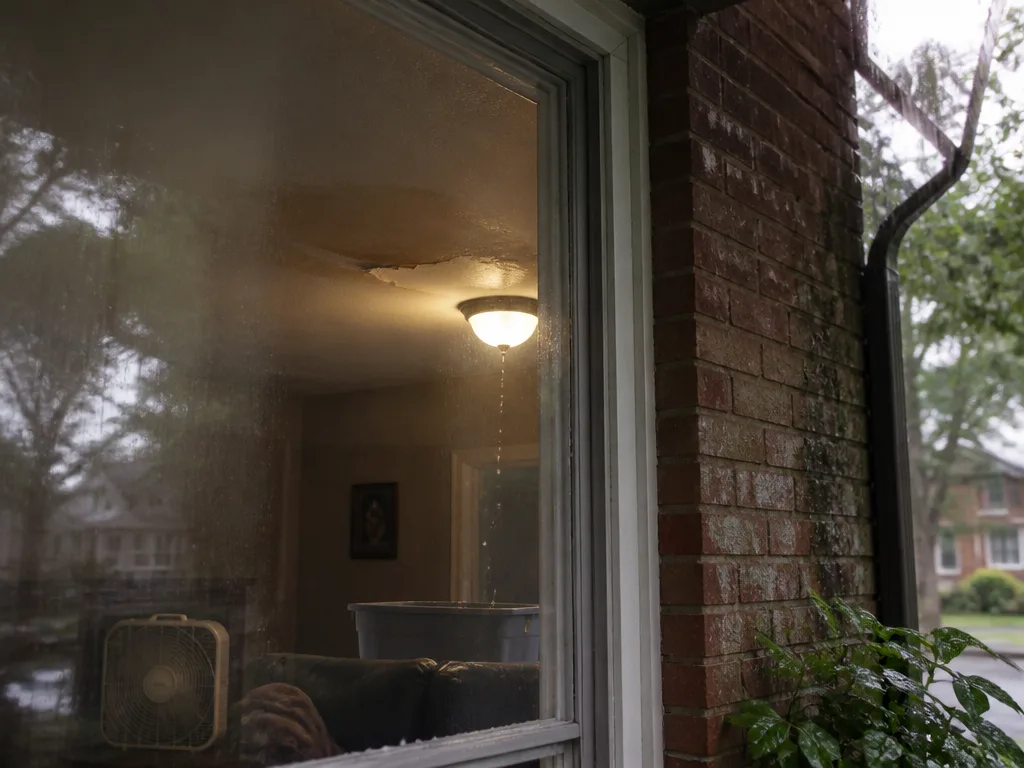
- Water that is still flowing, or that returns within a few hours after you mop it up
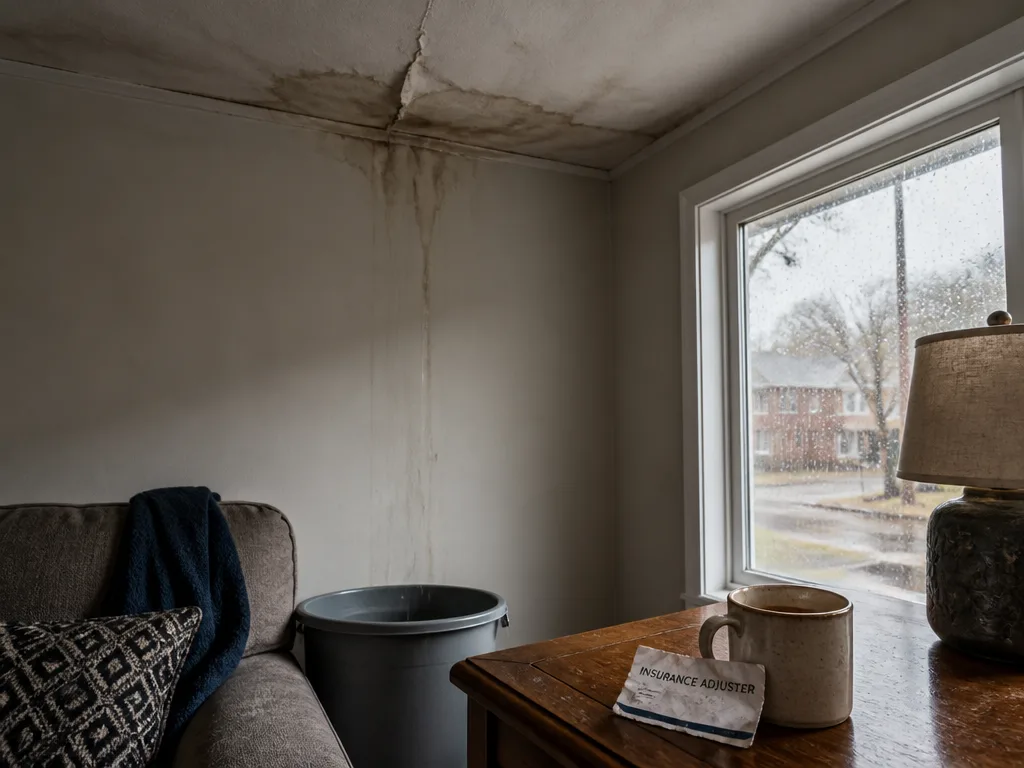
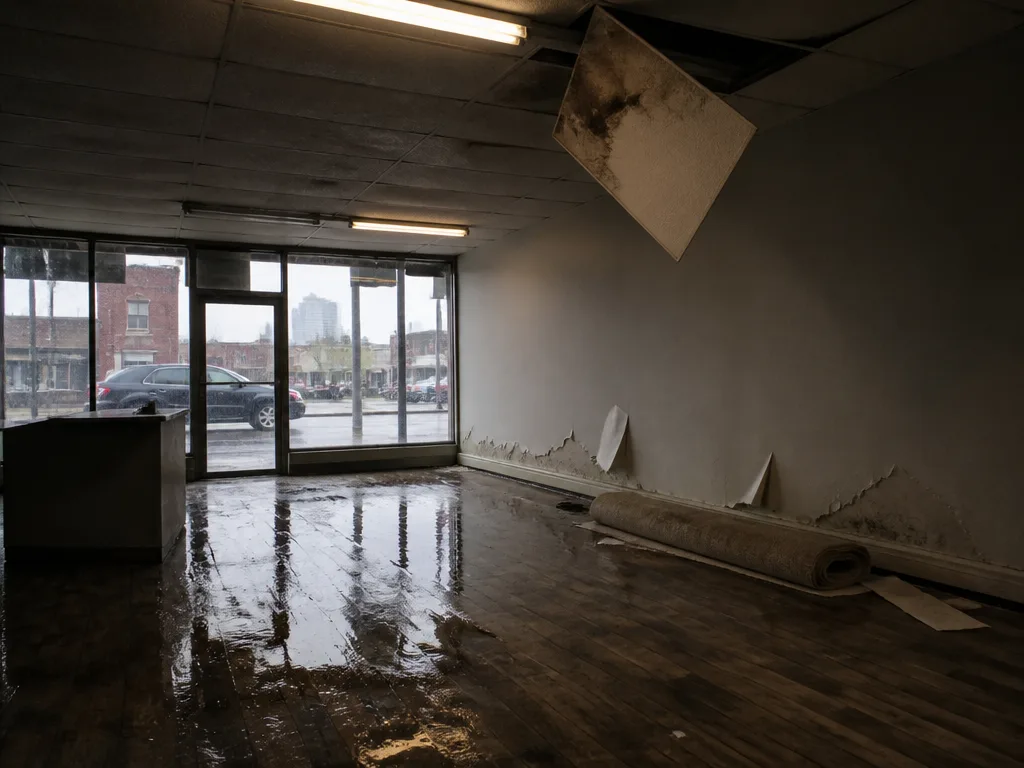
- Ceiling tiles that sag, stain, or drop out of the grid
- Drywall or baseboards that feel soft when you press them, or that bow away from the wall
- A damp, sour smell that gets stronger each day, even with no visible puddle
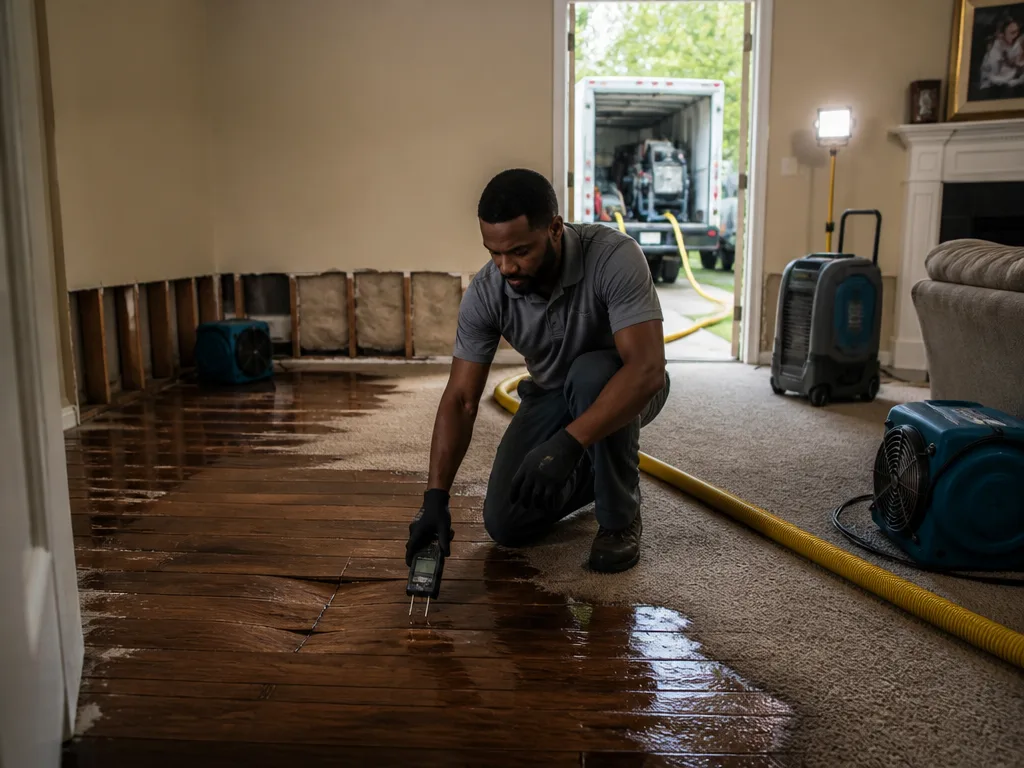
- Floor coverings that buckle, lift at the seams, or feel spongy underfoot
- Electrical equipment or power strips sitting in standing water, or water near active electrical panels
That last one deserves special attention. If water is anywhere near power sources, stay out of that area and keep others away from it too. Do not wade in to test it. Call someone who can shut the situation down safely.
The one-hour test
Here is a quick way to judge how serious things are. Mark the edge of the wet area with painter's tape or a piece of chalk, then check it an hour later. If the edge has moved, the water is still active. That usually means a supply line, a roof penetration, or a drain problem that has not been found yet. Write down the time and the location so you can tell the restoration specialists exactly what you saw.
A dry-looking floor can still be wet underneath. If you walk the space and notice warmth in one spot, a faint change in the sound of your footsteps, or a stain on the underside of a ceiling, take that seriously too.
What to do while you wait for help
Waiting is the hard part. You want to do something, and there are a few useful steps that do not put you at risk or make the damage worse.
Start with safety. Shut off power to the affected zone at the breaker if you can reach it without standing in water. If you cannot reach the breaker safely, leave it alone and keep everyone clear of the area. Next, stop the source if it is obvious and simple to reach, like closing a valve you already know about. Do not start tearing out walls or pulling up flooring on your own. That often spreads the damage and can hide where the water actually came from.
Move what you can. Pull inventory, files, computers, and furniture off the floor and onto shelves or tables, away from wet areas. Photograph everything before you move it. Take wide shots of the room, close shots of stains and damaged materials, and a few pictures of the water line on the walls. Those photos will matter later when you talk with your insurance company.
Open windows and run fans if the weather allows and the power is safe to use. Circulating air helps, but it is not a substitute for proper drying equipment. If the room is closed up and humid, leave the fans running and step out.
Things to avoid in the first few hours
Do not throw away damaged items before they have been documented. Do not run a wet vacuum that is plugged into a power source sitting in water. Do not assume the leak has stopped because the flow looks slower. And do not wait until the next business day to report it just because the water seems to have leveled off.
How to get the right help moving
When you call, give the crew the basics: the address, what you see, where the water seems to come from, whether power is still on in the affected area, and when the problem started. If you already know the building's shut-off valves or the location of the main electrical panel, tell them that too. Those details help our team plan the first visit before anyone walks in.
Ask your building manager or tenants to keep a log of times and changes. A simple note on the door or a shared sheet with what was seen and when can save a lot of back-and-forth later. If your insurance policy has an open claim process, keep the photos and the log together in one place so they are easy to hand over.
Birmingham Insurance Claim Assistance works with commercial property owners across the Birmingham area and nearby towns. Our restoration specialists can come out, assess what is happening, and start drying and stabilizing the space. The fastest way to get started is to call the office directly. Describe what you are seeing, and we will tell you what the next step looks like.