You mopped up the water, pulled the wet towels, and the bathroom finally smells like soap again. That feels like the end of it. In a lot of Birmingham homes, though, the real work starts after the visible mess is gone. Water from a toilet overflow soaks down into the subfloor, under the baseboards, and sometimes into the wall cavity behind the tub. If that moisture stays put for even a few days, you can end up with soft flooring, a musty hallway, or paint bubbling along the wall two months later.
At Birmingham Insurance Claim Assistance, we see this pattern all the time. The cleanup went fine, nobody skipped a step, and then the house quietly kept holding onto water. This post walks through what to watch for, what to do in the first week, and how to find the cause so the overflow does not repeat itself.
Why the first 72 hours matter more than the cleanup itself
Most of the water you can see is only part of the story. Porous materials like carpet padding, drywall paper, and the lower edge of cabinet kick plates wick moisture upward and sideways. Birmingham summers make this worse. Humidity sits around 70 percent for long stretches, and a closed bathroom with a wet floor can feel like a sauna within a day.
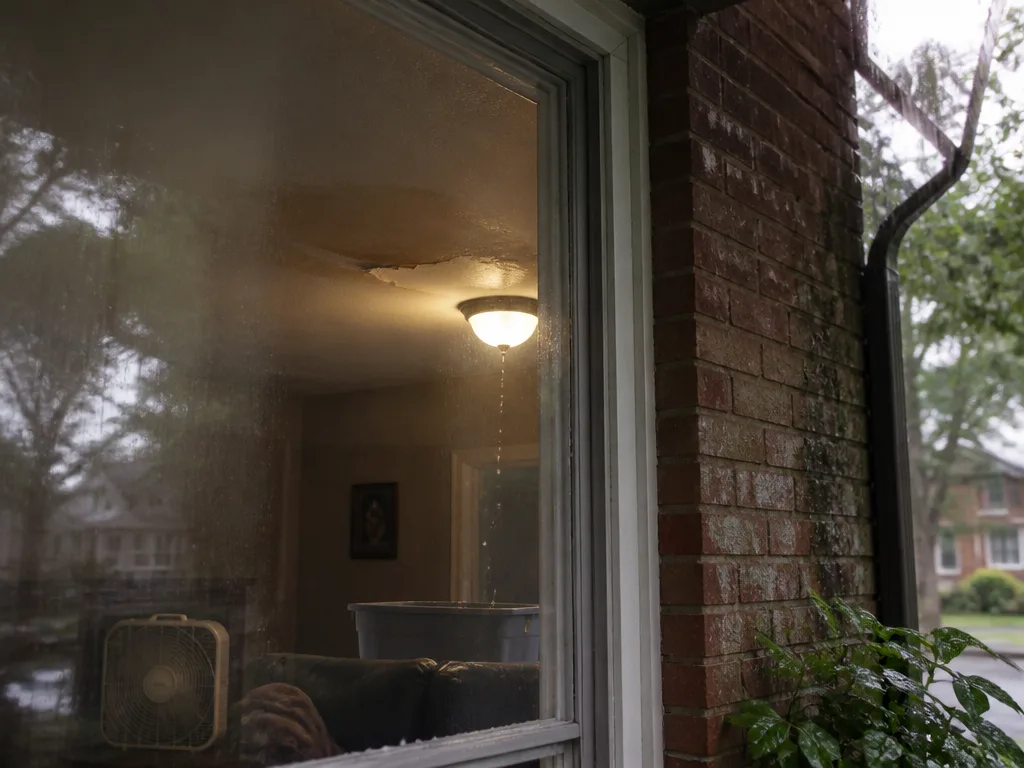
Open the bathroom door and run a fan if you have one. If you do not, a box fan pointed at the wet spot works fine. Keep the air moving for at least two or three days after the floor feels dry to the touch. Dry to the touch and dry underneath are two different things, and that gap is where mold starts.
Check the spots people forget. Look under the vanity, behind the toilet base, along the edge of the tile where grout meets the wall, and inside the closet next to the bathroom if it shares a wall. Press a flat screwdriver lightly into any baseboard that looks darker than the rest. If it gives or feels spongy, that section needs attention before it spreads.
What to check in the weeks after the cleanup
Moisture problems show up slowly. A week after the cleanup, walk through the room with fresh eyes and look for changes. Here is a short checklist our crew suggests to homeowners in the Birmingham area:
- Feel the floor near the toilet base and along the tub edge each morning for the first two weeks.
- Look for paint that lifts, bubbles, or turns a slightly different shade near the bottom of the wall.
- Notice any new smell that gets stronger when the bathroom door has been closed for a few hours.
- Watch for hairline cracks in grout or caulk that were not there before the overflow.
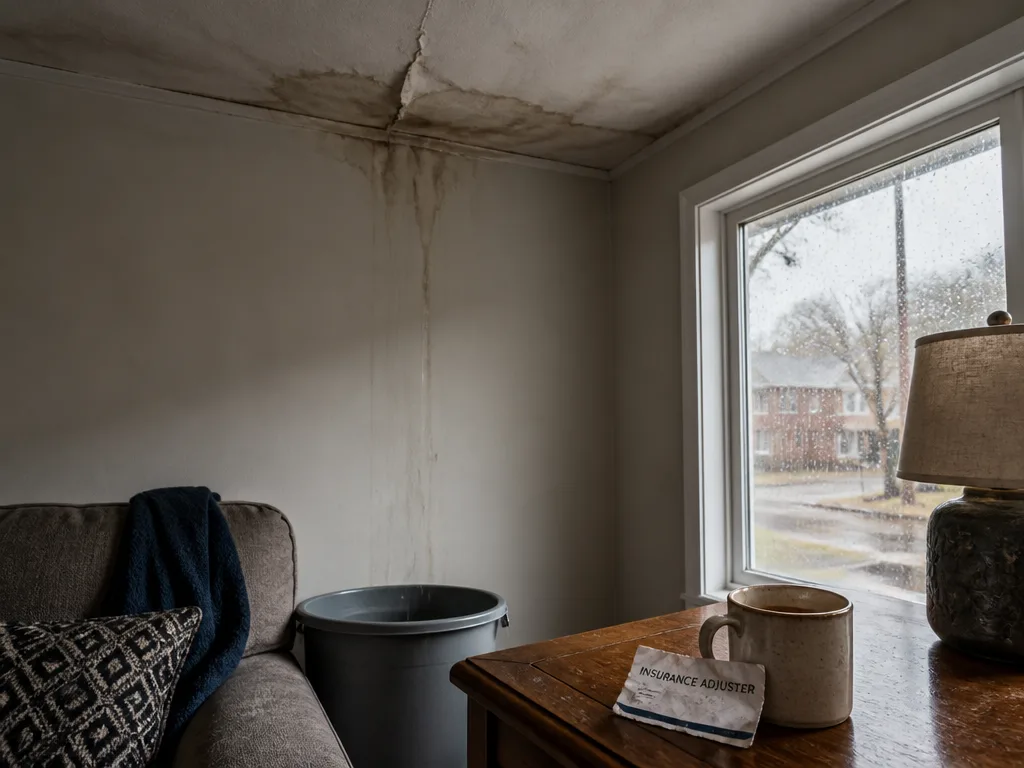
- Check the ceiling below the bathroom if you have a second floor, especially near the exhaust fan housing.
If anything on that list shows up, do not wait for it to get worse. Take photos with the date visible, write down what you noticed, and call a restoration specialist to look at it. Those notes matter later if you need to explain what happened and when.
Pay attention to the subfloor
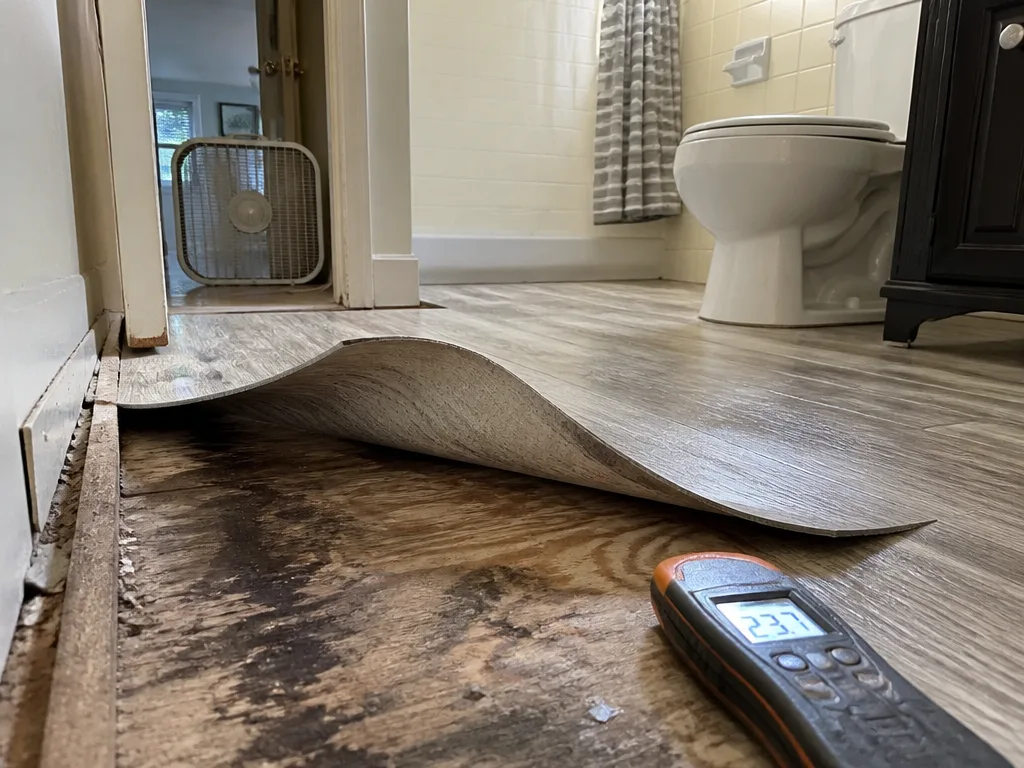
Subfloor damage is the most common surprise after an overflow. Plywood and particleboard can swell at the seams and lose strength even when the top surface looks fine. A floor that gives a little when you step near the toilet is a warning sign. So is a tile that rocks or a vinyl plank that has started to lift at one corner. Those signs point to moisture that has moved below the surface, and they usually mean the cleanup needs a second pass.
Watch the drywall at the baseline
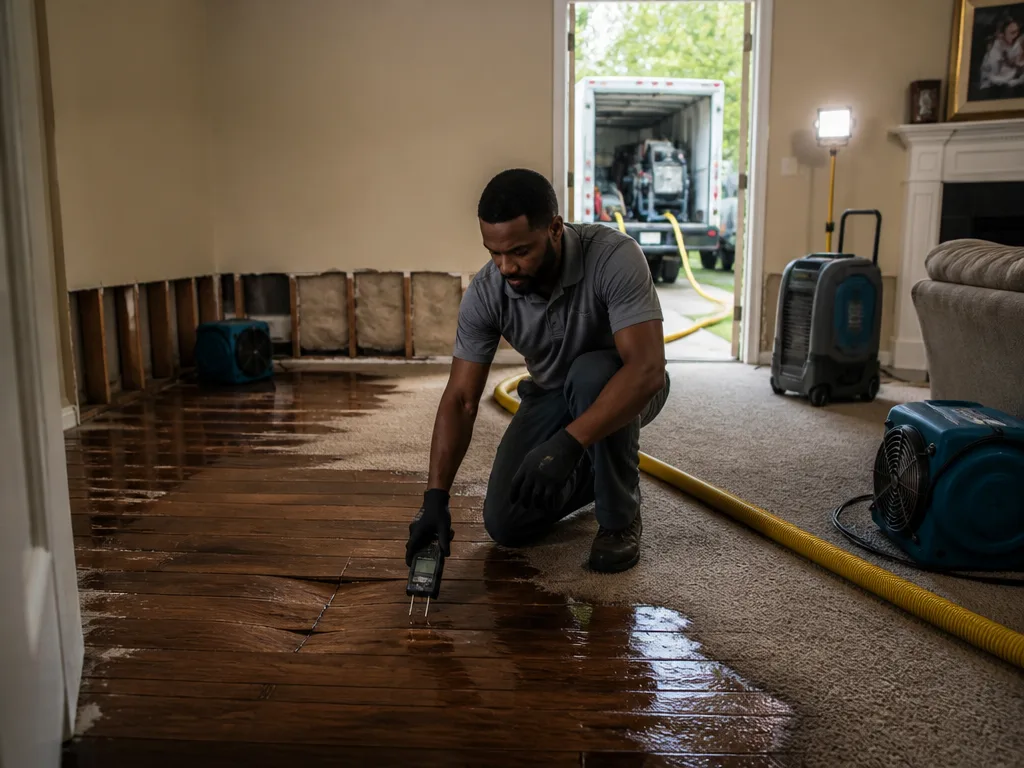
Water wicks up drywall about an inch or two above the floor line, sometimes further. The paint might look fine while the paper behind it stays damp. Run a moisture meter along that line if you have access to one, or simply press your palm flat against the wall for ten seconds. Cool or clammy spots deserve a closer look.
Finding the cause so it does not come back
Cleaning up an overflow fixes the damage that happened. Stopping the next one means figuring out why it happened. Toilet overflows in older Birmingham homes often come from a handful of familiar causes, and it helps to rule them out one at a time.
Start with the fill valve inside the tank. If the water level sits above the overflow tube, the valve is set too high or failing to shut off. Lift the tank lid and watch the water line for a few minutes after flushing. It should settle a little below the top of the overflow tube and then stop rising. If it keeps climbing, the float or valve needs replacing.
Next, look at the clog side. Toilets that drain slowly tend to overflow when someone flushes a second time or runs the sink at the same moment. Hard water from the Birmingham supply can leave mineral buildup in the trap over time, which narrows the path and makes small clogs more likely. If your toilet has been gurgling or taking longer to empty, that is a clue worth acting on early.
Finally, think about what goes down the line. Wipes, paper towels, and cotton swabs do not break down the way toilet paper does. Keep a small wastebasket next to the toilet and make it a habit to use it. It is a simple change, and it removes one of the most common causes of recurring backups.
Small habits that protect the results
Once the room is dry and the cause is identified, a few routine habits keep the problem from creeping back. Put a waterproof mat or a sealed transition strip where the bathroom floor meets the hallway so future spills stay contained. Re-caulk the base of the toilet and the tub edge once a year, since old caulk lets water slip underneath. Keep a towel or two near the toilet for quick cleanup, and check the caulk lines around the tub every spring.
It also helps to know where your main shutoff valve is and whether it turns easily. If an overflow starts while you are asleep or away, being able to shut the water off quickly limits the damage. Walk the household through it so anyone home knows the location.
Keep a simple file with photos of the bathroom before and after any restoration work, along with the dates and a list of what was replaced. If the house ever needs a claim or a sale disclosure later, that paper trail makes the story much easier to tell. Our team at Birmingham Insurance Claim Assistance helps homeowners organize that kind of documentation after water damage, so the details are not scattered across phone photos and sticky notes.
When to call a restoration specialist
Some situations are beyond a weekend cleanup. Call for help if the floor feels soft, if you see staining that keeps spreading, if the smell returns after you thought it was gone, or if the overflow reached a room below. Call too if you find mold growth bigger than a few inches, or if the water came from anything other than the toilet itself.
Give us a call and describe what you are seeing. Our restoration specialists can walk through the room with you, explain what they find, and talk through the next steps. The phone is the easiest way to reach us, and a short conversation often clears up whether the room needs a quick follow-up or a bigger job.
Birmingham homes have plenty of character, from older plaster walls in Crestwood to newer builds out in Hoover and Pelham. Every house holds water a little differently. The steps above work across the board, but the best results come from paying attention to your own home over the weeks after the cleanup, not just the hours during it.